Protocol / Where LAP comes from
Where LAP comes from
From Tim Berners-Lee's 2001 dream of software agents, through the rules that made the web work and the lessons about authority, to a small protocol for the age of AI.
2001
Prologue: Pete and Lucy, 2001
A very concrete dream: an assistant that books Mom's appointments.
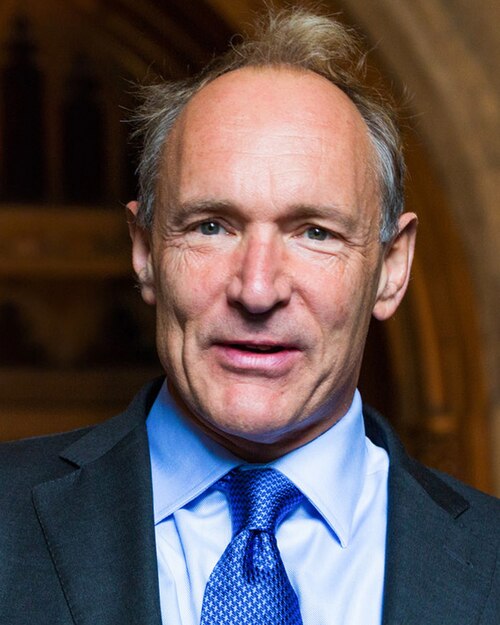

In May 2001, Tim Berners-Lee, James Hendler and Ora Lassila published "The Semantic Web" in Scientific American. It opens with an everyday scene: Lucy calls her brother Pete from the doctor's office; their mother needs a specialist and a series of physical therapy sessions. Lucy hands the job to a software agent on her handheld. The agent fetches the prescribed treatment from the doctor's agent, filters providers near Mom's home that her insurance covers and that are well rated, then matches their free appointment times with Pete's and Lucy's busy schedules.
“better enabling computers and people to work in cooperation”
Twenty-five years later, people still cannot ask an assistant to do exactly that on the real web. This page tells why, and which ideas LAP borrowed from those who came before in order to finish the job.
1945 · 1971
A dream older than the web
Machines prepare, people decide; and many people look at one map.
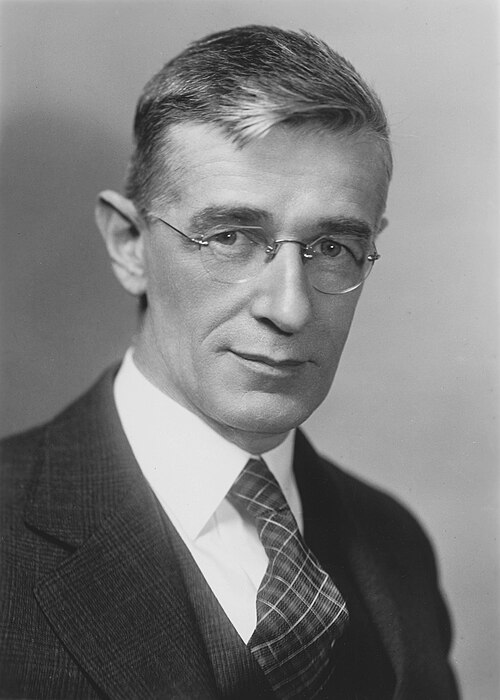

Vannevar Bush writes "As We May Think", imagining the Memex, a machine that helps people store and follow knowledge. The core idea: the machine extends human memory; it does not decide for people. V. Bush, "As We May Think", The Atlantic, July 1945 ↗
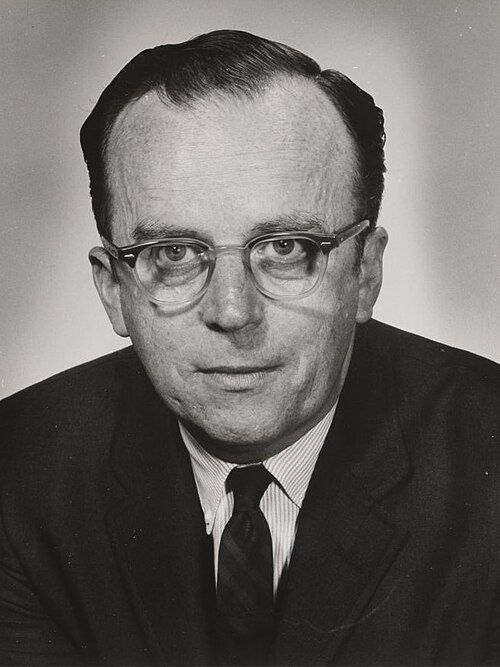

J. C. R. Licklider, who later funded the ARPANET, writes "Man-Computer Symbiosis". He splits the roles: machines do the routine preparation, people set the goals and make the decisions.
“human brains and computing machines will be coupled together very tightly”
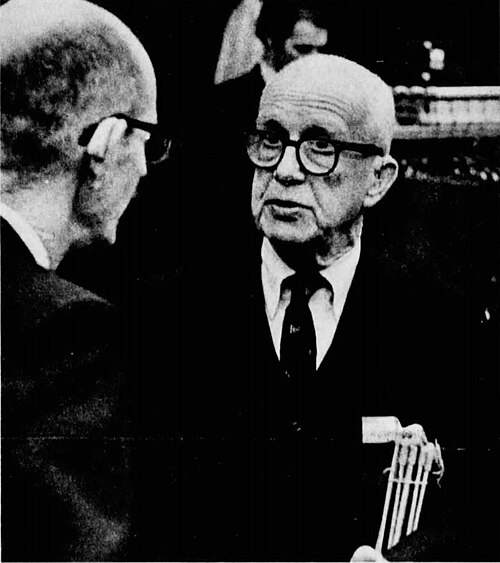

Architect and inventor Buckminster Fuller proposes the World Game: a cooperative game on a world map where players see the planet's resources, needs and constraints together, then try ways to allocate them. In 1969 he presents it to the US Congress; in 1971 his team publishes the playing guide at Southern Illinois University.
“To win the World Game everybody must be made physically successful”
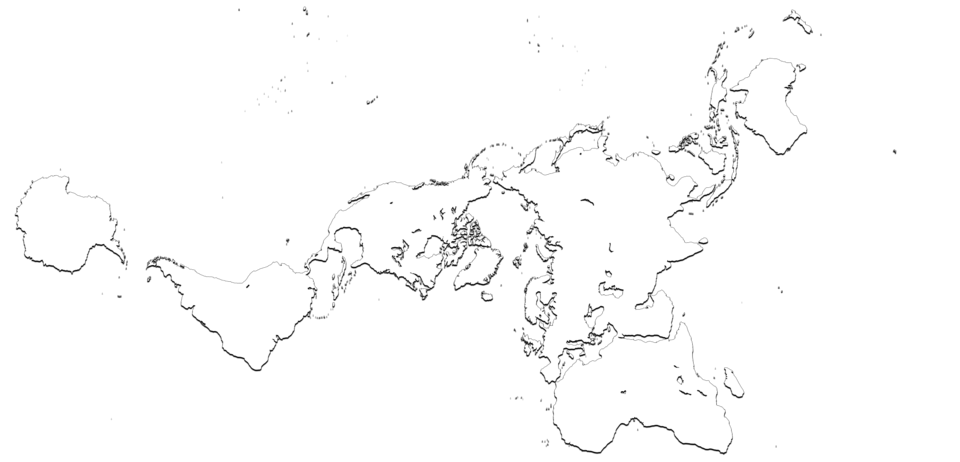

The game was real. What stayed fiction was a move on the map asking the real world whether the plan could be done right now. When every place publishes what it can do in a manifest, and every proposal is a link that opens a real preview, Fuller's map starts to answer that question.
LAP keeps both ideas: as with Licklider, the assistant prepares the link and the person decides; as with Fuller, every place says what it can do, so many parties can plan together on one shared map.
1980 · 2006
The rules that made the web work
The rules that keep the web both safe and simple.
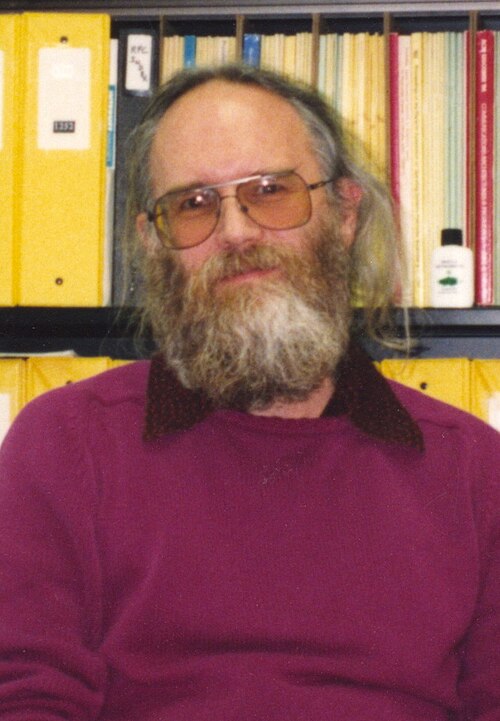

Jon Postel, editor of Internet standards for decades, writes into the TCP specification a principle that later bears his name.
“be conservative in what you do, be liberal in what you accept from others”
Forty years later, RFC 9413 warns that too much tolerance breeds vulnerabilities. LAP takes both lessons: tolerant about how an AI writes a link (encoding, plus signs, commas), uncompromising about authority and personal data. M. Thomson, D. Schinazi, RFC 9413, "Maintaining Robust Protocols", June 2023 ↗
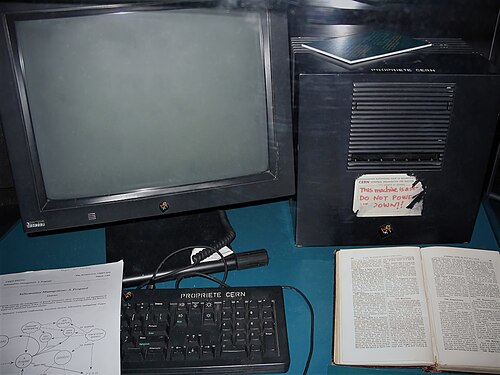

The HTTP/1.1 specification states that fetching an address with GET is for retrieval only and must not cause an action. That is why browsers, search engines and chat link previews dare to open any link on their own.
“SHOULD NOT have the significance of taking an action other than retrieval”
This is LAP's INV-1: opening an Intent Link never causes an effect.
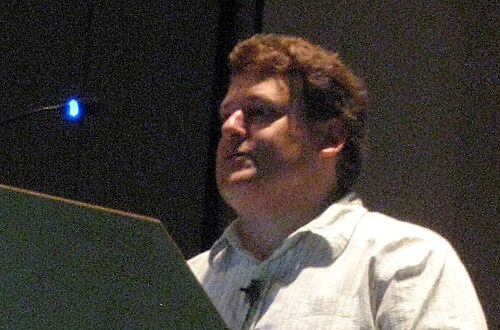

Roy Fielding describes the REST architecture in his doctoral dissertation. One key constraint: the server sends links that say what can be done next, and the client follows them.
“hypermedia as the engine of application state”
It rarely came true because clients were not smart enough to choose links themselves. In LAP, the suggestions and next fields do exactly this, and AI is now smart enough to follow them.
Tim Berners-Lee and Noah Mendelsohn write "The Rule of Least Power" for the W3C Technical Architecture Group: the simpler the language, the more machines can read it and the easier it is to control.
“Use the least powerful language suitable for expressing information, constraints or programs”
That is why, in LAP, an action is a link, not a piece of code.
1975 · 2014
Lessons about authority
Whoever holds authority must know on whose behalf it acts.
Jerome Saltzer and Michael Schroeder set out the principles of information protection, the best known being least privilege.
“the least set of privileges necessary to complete the job”
Hector Garcia-Molina and Kenneth Salem propose "sagas" for long-lived transactions: split the work into steps, each with a compensating step.
“compensating transactions are run to amend a partial execution”
LAP 1.0 draft 2 adds the undo field and the rules for chains of actions on exactly this idea.
Norm Hardy tells the story of the Confused Deputy: a program running with authority borrowed from someone else is tricked into overwriting an important file. The fault is not in the program but in holding authority for others without knowing on whose behalf it acts. That is exactly the nature of prompt injection against today's AI. N. Hardy, "The Confused Deputy (or why capabilities might have been invented)", ACM SIGOPS Operating Systems Review, 1988 ↗
LAP answers in the simplest way: the AI holds no authority at all. It only writes proposals; authority stays with the person, or with a device the person registered.
Researchers at Google publish Macaroons: a kind of token whose holder can add conditions that narrow it, then pass it on, without asking the server.
“Although macaroons are bearer credentials, like Web cookies, macaroons embed caveats”
This is the basis of delegated grants (new section 6.4 of the specification): authority can only narrow, never widen.
1997 · 2012
Attempts that stalled
Sound engineering, but machines did not yet understand people.
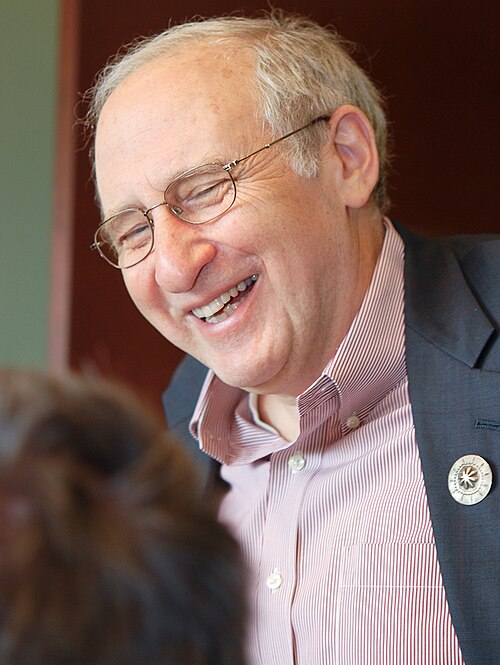



Ben Shneiderman and Pattie Maes debate in public: should people manipulate things directly, or delegate to agents? Two years later, Eric Horvitz proposes a middle way: the assistant acts when it is confident and mistakes are cheap, and asks otherwise. B. Shneiderman, P. Maes, "Direct manipulation vs. interface agents", ACM interactions, 1997 ↗
“an elegant coupling of automated services with direct manipulation”
LAP's four risk levels R0 to R3 apply that principle to the web: solving a sum asks nothing, publishing asks, unlocking a door verifies.
IBM, Microsoft and SAP run a public UDDI registry, dreaming of a "yellow pages" of every business service that machines would find and call on their own. The specifications were too heavy and machines still could not tell which service fit which need. In January 2006 they announced the closing of the public nodes. Web Services Discovery and the public UDDI registry (Wikipedia) ↗
Google and Mozilla try Web Intents to hand actions between websites, such as "share" or "edit photo". Chrome supports it in versions 18 to 23, then removes it at the end of 2012. What was missing was a resolver that understood what the user meant. Web Intents (Wikipedia) ↗
What these attempts share: the engineering was sound, but machines did not yet understand people, so everything had to be described rigidly and in too much detail.
2020s
What changed
AI understands people now, and is easily led too.
Large language models fill exactly the gap that the Semantic Web, UDDI and Web Intents all had: understanding what people say. But they bring a new risk: they are easily led by what they read, Hardy's confused deputy all over again.
So the missing piece is not more power for AI, but a simple, safe way for AI to propose actions while the decision stays with people. LAP does only that.
LAP
How we reasoned
Each design question is answered with an idea that has been tested.
The problem: a person tells any AI "do X on website Y", and it must get done, safely, even when the AI can only write text. Each design question below is answered with an idea that has already been tested.
- Rule of Least Power, 2006What can the weakest AI do?Write a string. So an action must be a URL.
- HTTP safe GET, 1999What if a link is opened by mistake?Opening a link never causes an effect (INV-1).
- Confused Deputy 1988; least privilege 1975Can the AI be trusted?It does not need to be: it holds no authority (INV-4).
- Horvitz 1999; Shneiderman and Maes debate 1997When should the person be asked?By risk level, R0 to R3.
- REST 2000; Ricardian contracts 1996How do people and machines read the same thing?One URL returns a preview page or JSON; receipts can be signed.
- How browsers handle fragmentsWhere does personal data go?Only after #, never to a server through the link (INV-2).
- Postel 1980, bounded by RFC 9413What if the AI writes a slightly wrong link?The website reads tolerantly and answers with suggested fixes (INV-5).
- Sagas 1987What if a chain fails halfway?Each step declares how to undo it.
- Capabilities; Macaroons 2014Automation without losing safety?Pre-approved grants with limits, revocable, and only narrowing when passed on.
In short: LAP invents almost nothing. It picks old ideas that proved right and assembles them around something everyone already has, the link, at the moment AI became able to understand people.
2024 · 2026
Conclusion: LAP and MCP
Two protocols, two problems, complementing each other.
The protocol closest to LAP today is the Model Context Protocol (MCP), published by Anthropic in late 2024. The two solve different problems and complement each other. Model Context Protocol, documentation ↗
| MCP | LAP | |
|---|---|---|
| Who connects to whom | The AI application connects to an MCP server | The assistant returns a link; a person or device opens it on the website |
| What the AI needs | Tool calling, with the MCP server installed | Only the ability to write text |
| Where the action happens | Inside the AI application, through tools | On the website itself, where the person sees who the provider is |
| Where authority lives | With the MCP server and the AI application it is given to | With the person, or a device the person registered |
| Confirmation | Up to the AI application | Required by risk level, on the website |
| Discovery | Configured by the user or developer | A public /.well-known/lap.json and directories |
| Best at | Private data, rich tools, continuous work | Public actions with human confirmation, from any AI |
MCP did not start from nothing either: it builds on JSON-RPC and takes inspiration from the Language Server Protocol. Both protocols follow a familiar path in engineering: assembling ideas that proved right for a new need.
They meet naturally: an MCP tool can return a LAP link for the person to review and confirm. MCP lets an AI do more; LAP lets every AI, even the weakest, propose an action while people keep the decision, just as Licklider imagined in 1960.
References
- T. Berners-Lee, J. Hendler, O. Lassila, "The Semantic Web", Scientific American 284(5), May 2001
- V. Bush, "As We May Think", The Atlantic, July 1945
- J. C. R. Licklider, "Man-Computer Symbiosis", IRE Transactions on Human Factors in Electronics, March 1960
- R. Buckminster Fuller, "The World Game: Integrative Resource Utilization Planning Tool", World Game Series: Document One, Southern Illinois University, 1971
- J. H. Saltzer, M. D. Schroeder, "The Protection of Information in Computer Systems", 1975
- J. Postel, RFC 761, "DoD Standard Transmission Control Protocol", January 1980
- M. Thomson, D. Schinazi, RFC 9413, "Maintaining Robust Protocols", June 2023
- H. Garcia-Molina, K. Salem, "Sagas", ACM SIGMOD, 1987
- N. Hardy, "The Confused Deputy (or why capabilities might have been invented)", ACM SIGOPS Operating Systems Review, 1988
- B. Shneiderman, P. Maes, "Direct manipulation vs. interface agents", ACM interactions, 1997
- E. Horvitz, "Principles of Mixed-Initiative User Interfaces", ACM CHI, 1999
- R. Fielding et al., RFC 2616, "Hypertext Transfer Protocol: HTTP/1.1", section 9.1.1, June 1999
- R. T. Fielding, "Architectural Styles and the Design of Network-based Software Architectures", doctoral dissertation, chapter 5, 2000
- Web Services Discovery and the public UDDI registry (Wikipedia)
- T. Berners-Lee, N. Mendelsohn, "The Rule of Least Power", W3C TAG Finding, February 2006
- Web Intents (Wikipedia)
- A. Birgisson, J. G. Politz, Ú. Erlingsson, A. Taly, M. Vrable, M. Lentczner, "Macaroons", NDSS, 2014
- Model Context Protocol, documentation
Quotes are verbatim, short and attributed. Photos come from Wikimedia Commons under the free licenses noted under each image. The same lineage is listed in Appendix D of the specification.